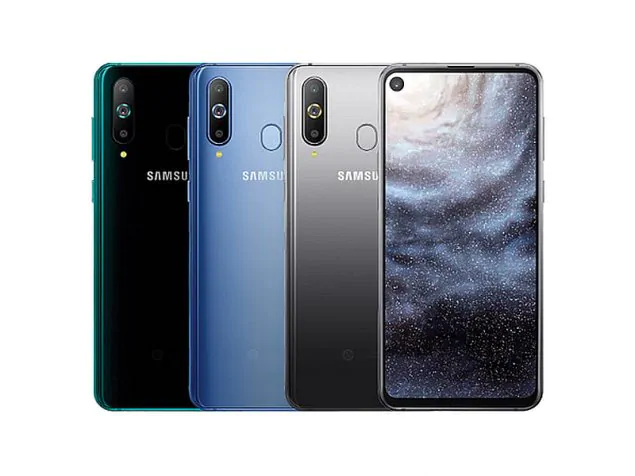
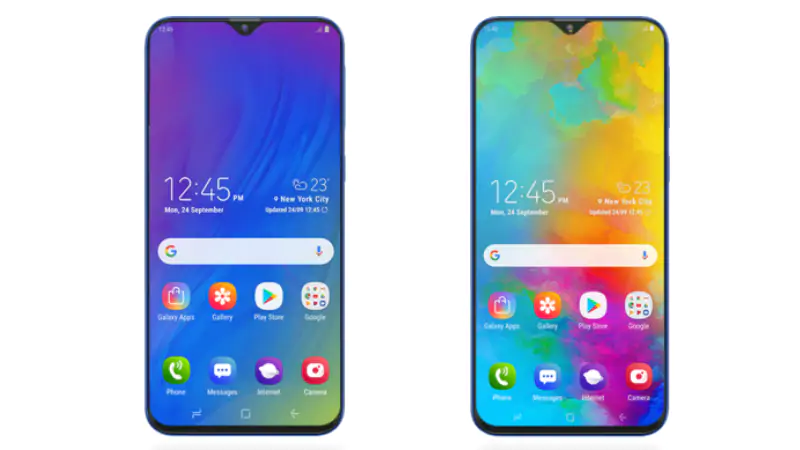
The displays on the Galaxy A30 and A50 appear colorful and rich in color. One UI gives redesigned icons with new coloration palettes. The presentations do look good for watching videos, at least from the few brief videos I was able to observe on YouTube.
Samsung has a clear goal over the next 12 months to win back some of the market share that has been lost due to emerging Chinese competition like Xiaomi, Oppo, and Vivo. To that, the organization launched the low-cost Galaxy M collection in January, and now, we’ve got the primary set of 2019 Galaxy A-series telephones. Samsung announced the Galaxy A30 and A50 smartphones in India on Monday.
Surely sufficient, Samsung may be very eager to make its Galaxy A-series phones look and feel as close to the flagship Galaxy S-series as possible. The new Galaxy A30 and A50 came with Infinity-U waterdrop shows and unique classic designs, and one of them even gets triple cameras and an in-display fingerprint sensor as well. While the Galaxy A30 and A50 are yet to go on sale in India, I found them casually displayed at MWC 2019, and I happened to test them out for a bit. Here’s what I concept.
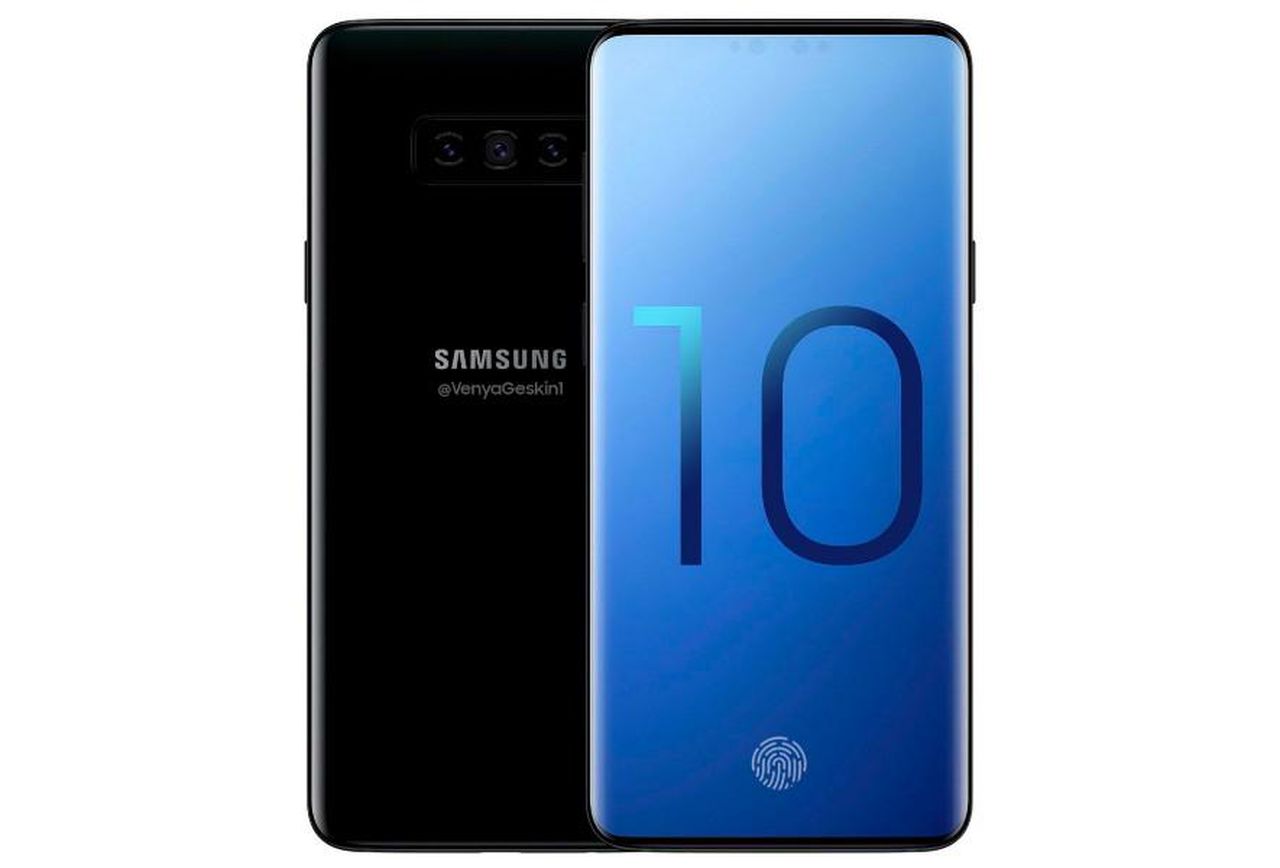
The Galaxy A30 and A50 appear quite different, particularly from the front. Both sports dropped notches, way to Samsung’s new Infinity-U show. There’s a tiny notch on top, while the bezel around it and on the perimeters is very skinny. The chin, however, is substantive and is no longer prominent as the chin on the Galaxy S10. The relaxation of the front is displayed, and they look truly desirable at a minimum glance.
Both gadgets offer 6.4-inch FHD+ Super AMOLED displays, and these do appear massive. The phones in the standard are pretty massive and may not be smooth for one-passed use had they been walking on the antique Experience UI. But the Galaxy A30 and A50 run on the modern One UI, primarily based on Android Pie, which is awesome to see. One UI is all about making it simpler to use big phones, and the new Galaxy phones are proof of that. As the top motion buttons are on the lower half of the display, accomplishing the keys becomes easy.
The presentations on the Galaxy A30 and A50 look vibrant with colors. One UI gives redesigned icons with new shade palettes. The shows do look accurate for looking at films, at least from the few short films I watched on YouTube. We could have the ability to say more at the displays once the gadgets go on sale in India.
There are a few key differences between the two devices. For one thing, the Galaxy A30 comes with twin cameras, even as the A50 receives a triple digicam setup. The A30 gets a rest-hooked-up fingerprint sensor, while the A50 receives an optical in-display sensor. Beyond that, both those telephones are in large part the same. They are also available in some cute colorings like black, white, blue, and coral, or pink, which strikes a chord in my memory of the iPhone XR.
I checked out the Galaxy A30 in black, and it shimmered quite a bit, depending on the way you view it under mild light. The A50 is also available in black, but it receives a rainbow-colored shimmer at the return. Both phones include a three.5mm headphone jack that is quality to peer, and a USB Type-C port. Both gadgets also house a beefy 4,000mAh battery, which has to provide a full day of battery life. However, we can’t touch upon that just yet. Notably, the Galaxy A30 and A50 each support 15W fast charging.
Both the Galaxy A30 and A50 tout remarkable cameras. The A30 gets a twin digicam machine that includes a 16MP f/1.7 sensor and a 5MPultra-wide-anglee camera. Meanwhile, the Galaxy A50 receives a 25MP f/1.7 sensor in conjunction with a 5MP depth sensor and an 8MP ultra-wide-angle camera. I became most effective at seizing some images in interior and average lighting, but the cameras appear to do an excellent job of taking pictures. The Galaxy A50 gives more effective approaches to the selfie scene, and it also provides that the phone will guide Live Focus mode.
The Galaxy A30 is powered by the 1.8GHz Exynos 7904 chipset, the same processor that powers the Galaxy M20 properly. It is available in two versions – 3GB/32GB and 4GB/64GB. The Galaxy A50 gets a 2.3GHz Exynos 9610 SoC, and it additionally gets two editions – 4GB/64GB and 6GB/128GB. In my restricted time with the devices, I found the consumer interface smooth on both gadgets, and the app load time became quite fast as well. We may have a higher concept of the performance in our in-depth review, so stay tuned for that.