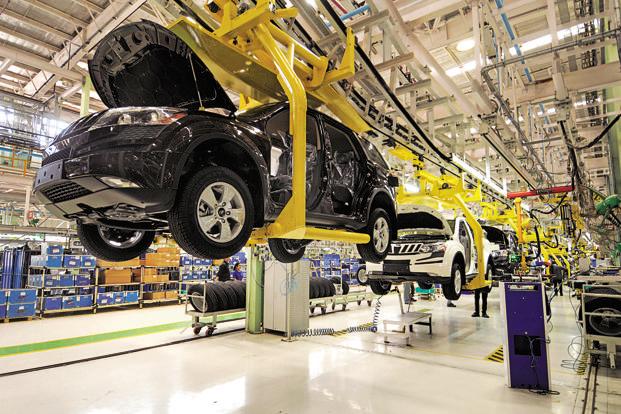
With over 3,000 direct and 000 indirect jobs, Kia has become the single most significant enterprise in the drought-prone vicinity. The ancillaries, inclusive of 18 South Korean companies, are expected to offer an additional 5,000 jobs.
South Korean vehicle manufacturer Kia Motors’ plant is about to convert Anantapur, one of the country’s most backward districts. The sprawling plant, which has come up over 536 acres of land in Erramanchi village in a span of just 14 months, is converting the landscape of Anantapur, one of the four districts in the backward Rayalaseema region.

In a region with one of the lowest rainfall rates in the US and once notorious for brutal killings with the aid of rival businesses fighting for supremacy, the plant, which began trial manufacturing on January 30, has come as a breath of fresh air. Located simply one hundred twenty-five km from Bengaluru airport, the plant has come up with an investment of $1 billion, even as an equal quantity pumped in using ancillaries. It is billed as one of the biggest Foreign Direct Investments (FDI) in India within the vehicle zone.
Kia Motors, the sector’s eighth-biggest automaker, plans to manufacture 300,000 vehicles at this plant every 12 months. The commercial production will start after July with SP2i, a SUV based on the Kia SP Concept, first showcased at India’s Auto Expo 2018. With over 3,000 direct and 7,000 indirect jobs, Kia will become the largest corporation in the drought-susceptible region. Along with 18 South Korean businesses, the ancillaries are anticipated to provide an additional 000 jobs.
Officials say the Korean township and other assisting infrastructure would generate more employment for locals. The Kia plant houses a 5-acre schooling facility that offers a Basic Technical Course (BTC) in motors in collaboration with the Andhra Pradesh State Skill Development Corp (APSSDC), helping increase production competencies among young people, four hundred of whom have been selected in the first batch.
“The plant is a first-rate boon for the region in terms of employment, funding, and in terms of creating self-assurance among younger people. People used to say that because the area is not endowed with resources, there can not be an improvement here; however, it has terrific human resources that need to be studied properly,” K. Lakshminarayana, Director, APSSDC, informed IANS.
He pointed out that APSKDC is assisting Kia in getting the students recruited and educated inthe Siemens Centre of Excellence at Jawaharlal Nehru Technological University (JNTU), Anantapur. Siemens Centre of Excellence has 14 labs to train college students in rising technology. With a Korean township, hostels, and hotels in the area, college students are also getting to know Korean and different foreign languages.
The Sri Krishnadevaraya University, Anantapur, is providing a Korean language course. The Rayalaseema Development Trust is also training neighborhood youngsters in foreign languages, such as Korean and French. Officials accept that the eco-machine can even provide a fillip to micro, small, and medium enterprises and flip Rayalaseem, a region regularly termed as ‘Ralla Seema’ or land of stones because of recurrent drought, into ‘Ratnala Seema’ or land of diamonds.